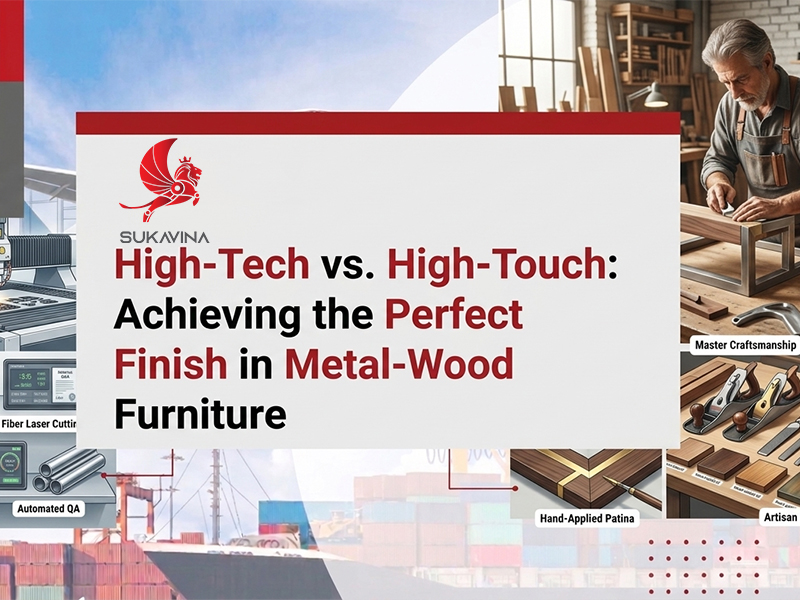
The Hidden Risks of Fragmented Sourcing in Multi-Material Furniture Production
⚡ Quick Answer — Why does fragmented sourcing fail in multi-material furniture?
Multi-material furniture quality control breaks down in fragmented supply chains because metal frames and wood components are engineered to different tolerances, finished in different environments, and assembled by a third party with no unified quality mandate. A 1mm weld deviation from one factory and a 0.8mm cutting variance from another are each within their individual supplier’s acceptance criteria — but together, they produce an assembly that doesn’t fit, a surface join that telegraphs the mismatch, and a warranty dispute where no single party accepts responsibility. Integrated manufacturing — where fabrication, wood processing, and finishing operate under one QC system — is the only architecture that structurally eliminates this failure mode.
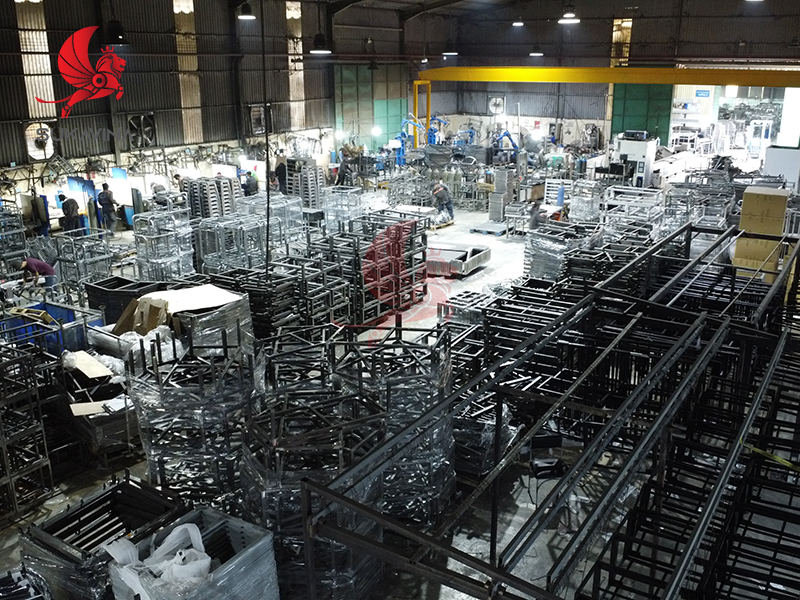
1. The Multi-Material Dilemma: Why 1+1 Does Not Always Equal 2
The standard procurement model for multi-material furniture — iron or steel legs from Factory A, solid wood or MDF tops from Factory B — appears rational on a spreadsheet. Each supplier is specialized, each quotes a competitive unit price, and the buyer assumes the components will integrate cleanly. In practice, this assumption fails at the dimensional, mechanical, and visual level with a frequency that experienced sourcing managers know well but rarely document formally.
⚠️ The Tolerance Gap Problem
A metal frame manufacturer works to a ±1.0mm weld tolerance for the top mounting plate. The wood processor cuts the tabletop recess to ±0.5mm. Both specs pass internal QC independently — but when assembled, the cumulative deviation produces a visible gap or a forced fit that stresses the joint under normal load. Neither supplier is technically at fault. The gap belongs to the sourcing model itself.
🎨 The Finish Inconsistency Problem
Powder coating for metal and stain finishing for wood are developed by two separate color departments referencing the same Pantone swatch — but through completely different chemistry and application processes. Color delta (ΔE) between the two outputs routinely measures 3.0–5.0 in practice. Anything above ΔE 2.0 is visually perceptible to a trained eye; anything above 3.5 is commercially unacceptable in the premium segment.
📦 The Assembly Accountability Problem
When a third-party assembler joins components from two separate factories, defects discovered during assembly — warped wood, off-spec mounting holes, powder coat damage during transit — trigger a chain of claims where each supplier disputes liability. The buyer absorbs the cost while the suppliers exchange documentation. This accountability void is a direct structural consequence of fragmented sourcing.
💡 Pro tip: Request a joint fit-test protocol before signing with multiple suppliers
Before committing to a multi-supplier arrangement, require that both suppliers produce a coordinated prototype assembled under observation. Any gap, finish mismatch, or mounting misalignment discovered at this stage — before tooling is cut and production runs are scheduled — costs a fraction of what the same defect costs after 500 units have shipped.
2. Critical Risks in Fragmented Supply Chains
The risks outlined below are not theoretical. Each represents a documented failure category that emerges with statistically predictable frequency when multi-material furniture is produced across disconnected supply nodes. Understanding the mechanism of each failure is the first step toward specifying a sourcing architecture that prevents it.
🚫 Structural Integrity Compromised

Structural failures in combined metal-wood furniture rarely originate in the material itself — they originate in the connection interface. When a metal frame manufacturer and a wood supplier each define their own mounting specifications independently, the resulting connection point is engineered by neither. Bolt patterns that don’t align precisely with pre-drilled wood inserts introduce micro-movement under cyclic loading.
Over 6–18 months of commercial use — particularly in restaurant and hospitality settings where tables are moved 8–12 times daily — these micro-movements compound into macro-level looseness. The outcome is either a customer safety incident or a premature warranty claim, either of which triggers a product recall process that costs an average of 40–60 times the original per-unit QC investment that would have prevented it.
🗑️ Logistical Complexity & Accountability Void
When semi-finished goods transit between factories — metal frames from Factory A shipped to Factory B for wood top installation, then to a third facility for finishing — each handoff introduces physical risk (transit damage), information risk (spec documents getting lost or misinterpreted), and time risk (delays compounding at each node).
More critically, each handoff also transfers accountability in ways that are difficult to contractually anchor. When the assembled piece fails a buyer’s incoming inspection, the metal supplier points to its own passing QC report, the wood supplier does the same, and the transport provider cites packaging adequacy. The buyer holds the defective goods and no party holds clear liability. This is not an edge case — it is the default outcome when accountability is structurally fragmented.
🕐 Increased Lead Times & Hidden Costs
Fragmented production introduces what supply chain analysts call “queue time” — the accumulated waiting periods between process steps at different facilities. A metal frame completed at Factory A on Day 12 does not move to wood processing at Factory B until a minimum batch is ready for cost-efficient transport. This batch synchronization alone adds 5–12 working days to total lead time on a typical 200-unit order.
| Cost Category | Fragmented Sourcing | Integrated Manufacturing | Notes |
|---|---|---|---|
| Inter-factory transit (200 sets) | $800–$1,400 USD | $0 | Internal transfer, no freight cost |
| Rework rate (industry avg.) | 3–7% of batch | <0.5% of batch | Batch QC every 50–100 units |
| Lead time premium (200 sets) | +10–18 working days | 0 additional days | No inter-factory queue time |
| Accountability clarity on defect | Disputed / shared | Single party, contractual | One manufacturer, one warranty |
| Color delta (ΔE) between materials | ΔE 3.0–5.0 (typical) | ΔE <1.5 (controlled) | Unified color lab, same environment |
*Comparative data based on industry production records and Sukavina Group manufacturing data, 2025–2026.
💡 Pro tip: Calculate total cost of ownership, not unit cost
A fragmented supplier arrangement that saves $4 per unit on paper can generate $25–$60 per unit in rework, transit, delay, and warranty costs when the integrated failure rate of the assembled product is factored in. Before comparing quotes from single-material specialists, model the full cost stack including inter-factory logistics, incoming inspection labor, and expected rework percentage.
3. The 2026 Quality Control Checklist for Multi-Material Furniture
The checklist below is structured for B2B buyers evaluating manufacturing partners for multi-material furniture programs. Each criterion corresponds to a specific failure mode documented in fragmented sourcing arrangements. Suppliers that cannot satisfy all items in this checklist should be disqualified from projects where brand reputation is at stake.
✅ Section A — Material Input Controls
Steel moisture and mill certification: All steel tube and sheet inputs must be accompanied by a mill test report (MTR) confirming yield strength (minimum 235 MPa for furniture-grade mild steel) and chemical composition. Accept no substitutions without re-testing.
Timber moisture content: Solid wood components must reach equilibrium moisture content (EMC) of 8–12% before machining. Wood processed above 14% moisture will shrink post-assembly, opening joints and creating surface cracks within 6–18 months of installation in air-conditioned environments.
MDF formaldehyde certification: Engineered wood panels must meet E0 or E1 emission standards (CARB Phase 2 for US market; EN 717-1 for EU market). Request third-party test reports, not self-declarations.
✅ Section B — Metal Fabrication QC
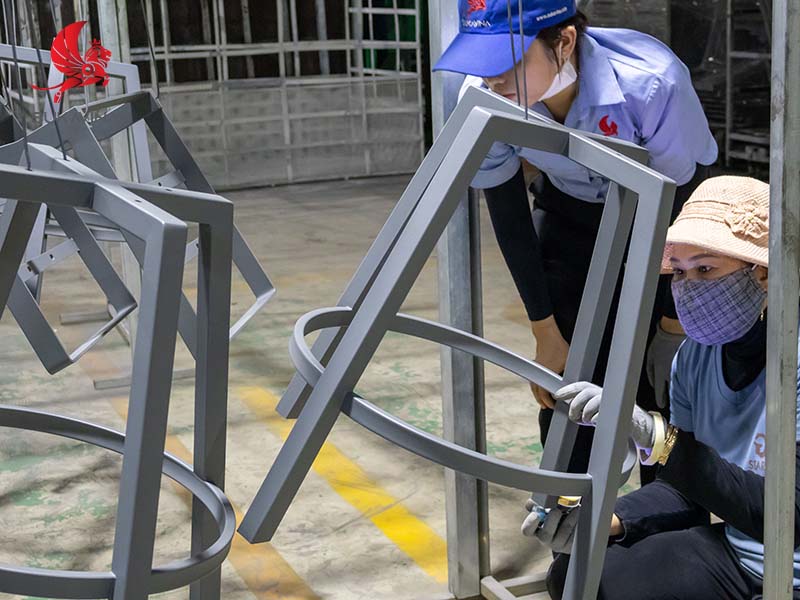
Welding strength test: MIG weld joints on load-bearing connections must achieve minimum tensile strength of 400 MPa. Require destructive pull-test data from production samples — not just visual inspection of weld bead appearance.
Dimensional tolerance verification: Confirm that mounting hole patterns and top plate dimensions are verified with a coordinate measuring machine (CMM) or fixed gauge, not a tape measure. Tolerance on connection points must be ±0.3mm or tighter for precision wood assembly.
Salt spray test (outdoor & coastal projects): Powder-coated frames destined for outdoor environments require ASTM B117 salt spray testing at minimum 500 hours. Coastal or poolside applications should specify 1,000+ hours with zinc phosphate pre-treatment confirmed by process documentation.
Coating adhesion cross-cut test: Per ISO 2409 or ASTM D3359, powder coat adhesion must achieve Class 0 (no flaking at cut grid). This test must be performed on cured samples from the actual production run, not on pre-production test panels alone.
✅ Section C — Multi-Material Integration QC
Fit-test protocol on assembled unit: Before full production approval, a minimum of 3 fully assembled units must pass a fit-test verifying: zero gap at metal-wood interface (<0.5mm), no rocking on flat surface (<1mm deflection), and all fasteners fully seated without material deformation.
Color delta measurement (ΔE): Both powder-coated metal and finished wood surfaces must be measured with a spectrophotometer under D65 illuminant. Maximum acceptable ΔE between materials on the same assembled piece is 2.0. Units exceeding this threshold must be color-matched or rejected.
Load capacity test per BIFMA X5.1 / EN 581: Assembled tables must be tested to the applicable standard for the intended market. BIFMA X5.1 (US commercial) requires vertical load testing at 250 lbs (113 kg) sustained for 10 seconds without permanent deformation. EN 581 (EU outdoor) requires equivalent structural loading with additional stability criteria.
Batch QC sampling plan: QC inspection must be conducted every 50–100 assembled units (not end-of-run), following an AQL 1.5 sampling plan for critical defects and AQL 2.5 for major defects. Batch-level inspection prevents defects from propagating through the full production run before detection.
💡 Pro tip: Use this checklist as a supplier audit scorecard
Distribute this checklist to prospective suppliers before sample development and request documentary evidence for each item. A supplier that can provide test reports, process documentation, and measurement data for all criteria without significant delay has an embedded QC culture. A supplier that negotiates which items “aren’t really necessary” is telling you precisely where the next defect will originate.
4. The Sukavina Solution: Eliminating Error via Closed-Loop Production
The structural antidote to fragmented sourcing is not better inter-supplier communication protocols — it is manufacturing architecture that eliminates the inter-supplier gap entirely. Closed-loop production means every material transformation — from steel tube to finished frame, from raw timber to coated tabletop, from component to assembled unit — occurs within a single quality management system, under a single engineering authority, and accountable to a single contractual party.

⚙ Synchronized CNC Data
At Sukavina’s precision metal fabrication facility, the CNC cutting and bending programs for metal frames and the CNC routing programs for wood components are generated from the same CAD model. There is no manual re-drawing, no specification translation between departments. The tolerance data flows from one digital source to both production lines simultaneously — eliminating the inter-factory specification drift that fragmented sourcing cannot prevent.
🌟 Unified Color Laboratory
Powder coating for metal and lacquer or stain finishing for wood are developed in the same color laboratory, measured against the same reference standard, and approved together on a physical assembly — not separately on individual material swatches. The ΔE between metal and wood surfaces on a production unit from Sukavina Furniture is routinely measured below 1.5, compared to the 3.0–5.0 range typical in fragmented arrangements.
📋 High-Touch Final Assembly Check
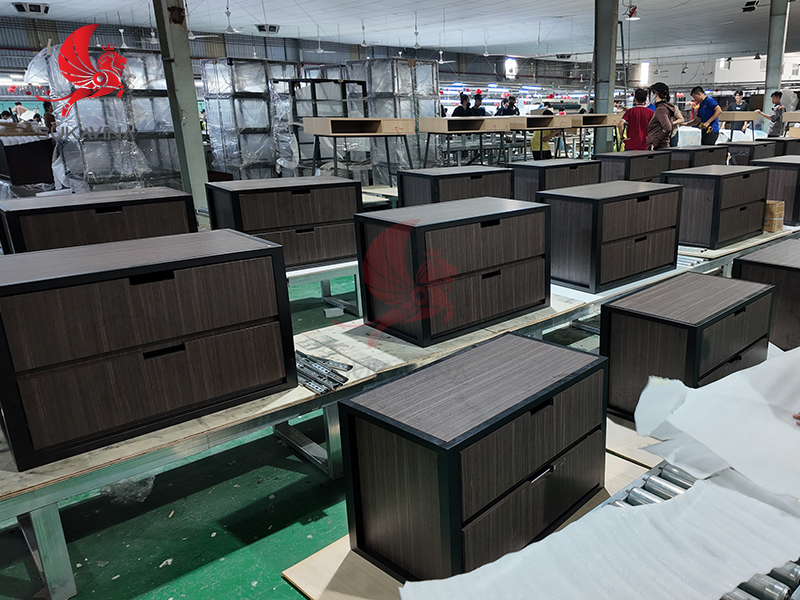
The “High-Tech” advantage of synchronized CNC data is complemented by a “High-Touch” final assembly check: every completed unit passes through a dedicated QC station where a trained inspector verifies fit, finish, load stability, and visual consistency against a golden sample reference. This is the last defense line before packing — and with batch QC already having caught upstream deviations, the final inspection rate is a genuine quality gate rather than a formality.
🌎 Export Compliance Built In
At Sukavina, international certifications and compliance documentation are established as mandatory standards from the outset, rather than mere afterthoughts. This positions us as a strategic partner in Vietnam’s 2026 furniture export sector, fully meeting the stringent requirements of the EU and North American markets.

CNC laser cutting — ±0.1mm precision on steel

Powder coat finishing — same lab, same ΔE standard

Final assembly check — fit, finish, load stability
💡 Pro tip: Ask for a closed-loop production diagram during factory evaluation
When visiting or auditing a prospective manufacturer, request a production flow diagram showing how metal and wood processes share engineering data, color references, and quality control checkpoints. A factory that operates truly integrated production will have this documented. One that doesn’t will describe “strong communication” between departments — which is a process workaround, not a quality architecture.
5. Conclusion: Protecting Your Brand Reputation
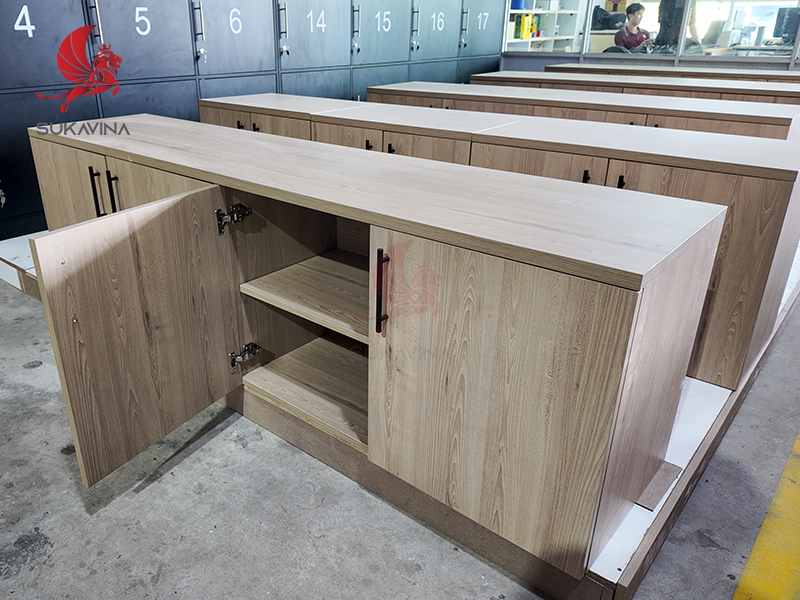
In the international furniture market — particularly across EU retail, US hospitality procurement, and Japanese contract channels — “Fit and Finish” has become the primary evaluation criterion that separates repeat contracts from one-off orders. Price is negotiated once, at the beginning of a supplier relationship. Fit and Finish is evaluated on every single unit that arrives at the buyer’s distribution center, and it determines whether the relationship continues.
A furniture brand that sources multi-material furniture from fragmented suppliers is, in effect, outsourcing its reputation management to a supply chain architecture that has no unified incentive to protect it. Each supplier optimizes for its own QC pass rate. None optimizes for the buyer’s brand experience at the point of end-customer contact.
Integrated manufacturing — where the same organization that cuts the steel also finishes the wood and assembles the final piece — is the only sourcing model where quality incentives, engineering data, and accountability are genuinely aligned with the buyer’s brand outcome. For 2026 sourcing programs where brand reputation is a non-negotiable asset, this is the standard against which every manufacturing partner should be evaluated.
Frequently Asked Questions
❓ What are the most common defects in metal-wood combined furniture?
The three most frequently documented defects in metal-wood furniture are: (1) interface gap between frame mounting plate and wood surface, caused by cumulative tolerance variance between independently manufactured components; (2) color mismatch between powder-coated metal and wood finish, measured as ΔE >2.0 between materials; and (3) joint looseness under cyclic loading, resulting from bolt patterns that were not co-engineered across metal and wood specifications. All three defects are structural consequences of fragmented sourcing rather than individual material failures.
❓ Why is integrated manufacturing more cost-effective in the long run?
Integrated manufacturing eliminates the three primary hidden costs of fragmented sourcing: inter-factory transit cost (typically $800–$1,400 USD per 200-unit shipment), rework cost (fragmented sourcing generates 3–7% rework versus under 0.5% in integrated production), and lead time cost (fragmented queue time adds 10–18 working days per batch, directly affecting inventory carrying cost and customer commitment schedules). When these costs are modeled across a full production program rather than per-unit, integrated sourcing typically delivers 20–35% lower total cost of ownership despite a higher headline unit price.
❓ How does Sukavina Furniture handle quality claims for large-scale projects?
Sukavina Furniture maintains complete production traceability for every order — batch QC records, material certificates, weld inspection data, and color measurement logs are archived by production batch and available to buyers upon request. For quality claims on delivered goods, Sukavina operates a single-point warranty process: one party, one contact, one resolution timeline. There is no cross-supplier liability dispute because there is no cross-supplier supply chain.
Zero Defects. Total Control.
Experience the power of Integrated Multi-Material Manufacturing with Sukavina Group.
CONSULT WITH OUR QC EXPERTS📍 SUKAVINA CO., LTD.
• Address: Binh Chuan 44 St, An Phu Ward, Ho Chi Minh City, Vietnam
• Hotline: +84 979 034 634 / +84 931 155 155
• Email: sales@vietmetalfurniture.com
• Website: sukavinafurniture.com